Civil society and mining-affected communities are urging their legislators to protect water over mining interests.
Since Argentinian President Javier Milei’s government introduced a bill to weaken the country’s Glacier Law in December, Argentina’s news and social media landscape has been dominated by worries about weakening of water protections and concerns about the role of the Canadian mining industry lobby in pushing for these reforms.
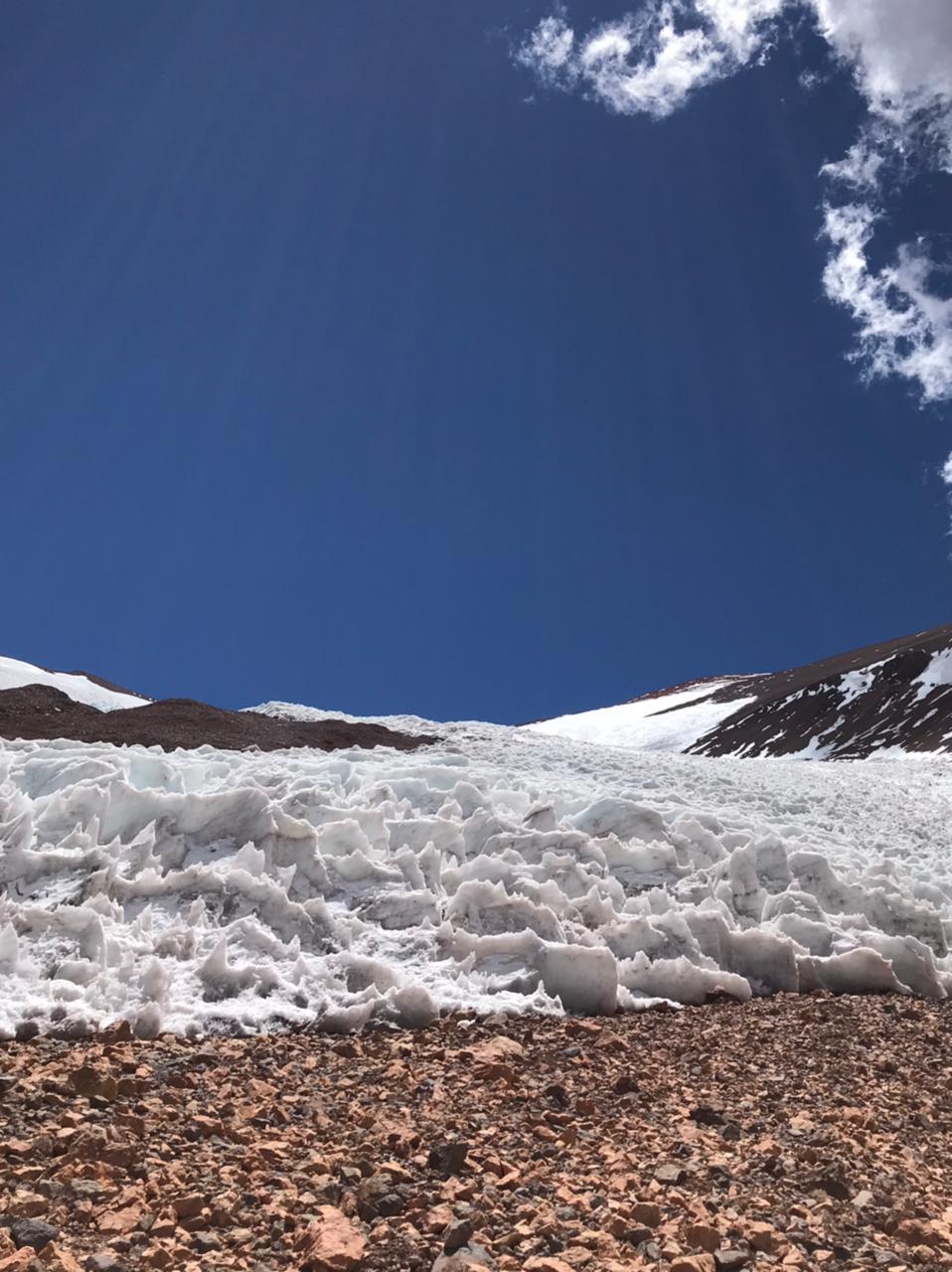
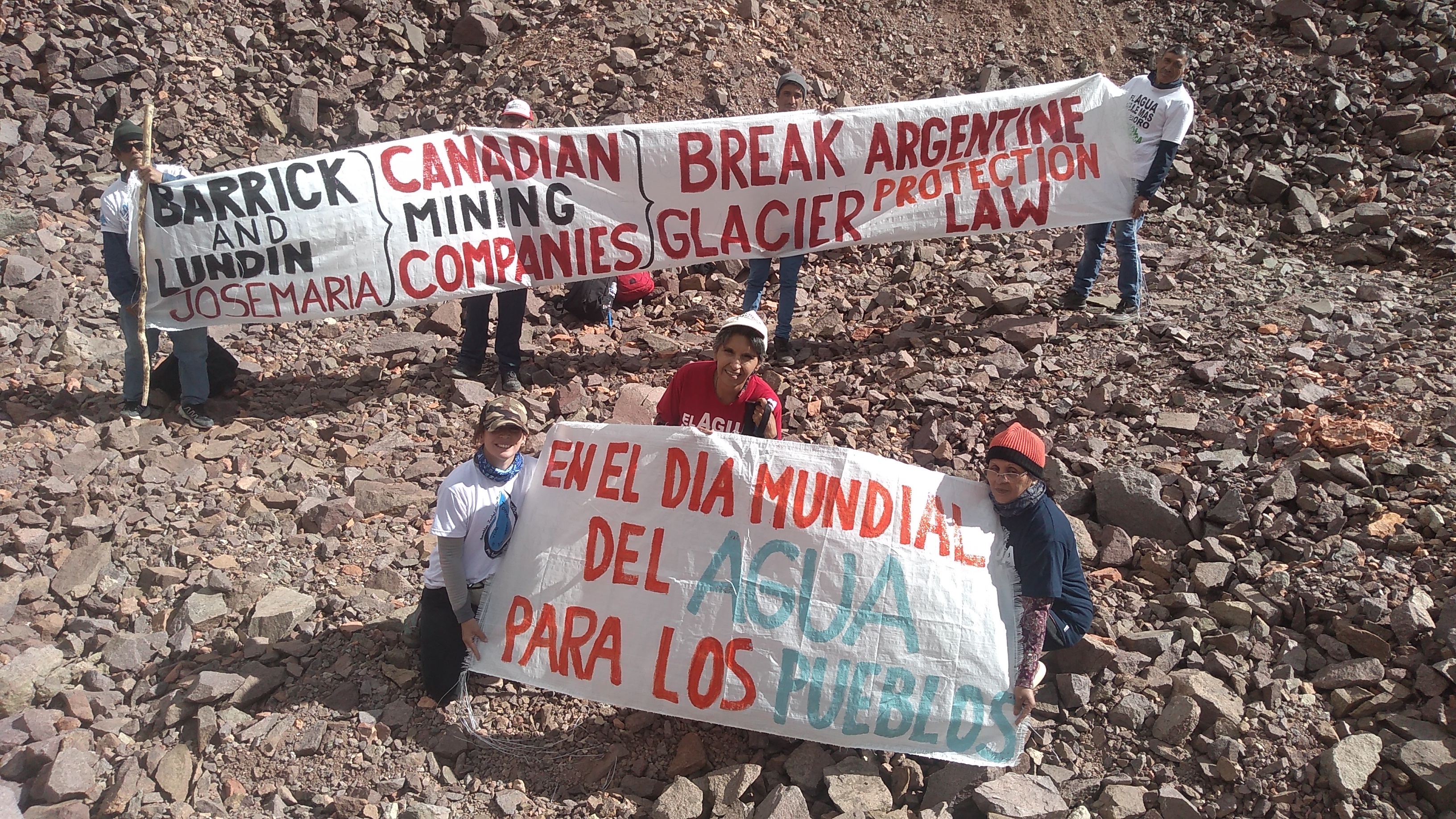
There is little to no reporting in the Canadian media landscape about the political influence the Canadian mining industry exerts in Argentina. Yet Canadian companies, including Barrick Mining Corporation and Lundin Gold, among others, have been identified as the corporate actors behind Milei’s initiative to "reform" the country’s glacier protection law. Critics say these reforms "would set a negative precedent", putting freshwater reserves at risk, removing environmental protections, and opening the door to large-scale copper and gold mining in the country’s most fragile ecosystems.
These reforms are about favouring mining
An Article-by-Article Analysis of the proposed reforms by 30 Argentinian social and environmental organizations shows how this initiative specifically and principally favours the mining industry. For example, the reform introduces arbitrary criteria that would allow glaciers to be excluded from legal protection if a provincial authority considers that they do not fulfill a "relevant water function." This would open the doors for pro-mining provinces, like San Juan and Mendoza, to exclude glaciers from the protection under the law, based not on science, but on profit and mining interests.
For Enrique Viale, environmental lawyer and the director of the Argentinian Association of Environmental Lawyers, what’s at stake is "the future of water sources for Argentina – glaciers are water factories.” Earlier this month, more than 85 constitutional and environmental law specialists sent a letter to Congress, warning that "the bill to be discussed in extraordinary session is unconstitutional, regressive, and jeopardizes the water protection system… and [compromises] the constitutional right to a healthy environment."
In a recent joint press release with five leading Argentinian environmental organizations, Greenpeace Argentina says, "Modifying the Glacier Law in the midst of a climate and water crisis means reducing the protection of strategic freshwater reserves for Argentinians and putting the water security of more than 7 million people at risk. Glaciers and the periglacial environment are not ‘worthless ice’: they regulate river flows, sustain watersheds in drought conditions, and play a key role in the face of rising temperatures."
Mining-affected communities, scientists, legal, environmental and social organizations, the Catholic church, artists, academics and many other groups have joined what has become a national movement across Argentina to denounce these reforms and protect the country’s freshwater.
This is not the first time the Glacier Law has been under threat.
Since the Glacier Law was first enacted in 2010, it has been under great pressure to be either overturned or modified from government officials at the national and provincial levels and mining companies.
Barrick Mining Corporation is one of the main companies vying for such reforms. For years, Barrick has attempted to have the country’s glacier law declared unconstitutional, arguing it could affect its mining projects near glacier areas, including the Veladero mine, known for causing "the worst environmental disaster caused by mining in Argentina’s history." In 2019, the Supreme Court rejected Barrick’s claim of unconstitutionality and upheld the glacier law.
The Canadian company has been condemned by institutions such as the Fundación Ciudadanos Independientes (FUCI) for cutting the Almirante Brown glacier in half in order to build a road connecting the Veladero mine and the Pascua Lama project, which caused the lower part of that glacier to disappear.
Two years ago, we reported that Barrick’s then-CEO, Mark Bristow was quoted as saying that "glaciers come and go" in reference to the Argentinian government's attempts to modify the Glacier Law at the time. Saul Zeballos, spokesperson for grassroots citizen group Asamblea Jáchal No Se Toca (Hands of Jáchal Assembly) affected by Barrick’s Veladero mine, responded to Bristow’s quote at the time, saying, "glaciers don’t come and go. They are gone forever because of destructive mining activity."
In December, when the new initiative to reform the Glacier Law was announced, Viale, testifying to a plenary session of the Environment and Sustainable Development and Mining Committees in the Argentine Senate, stated that "the reform has names and surnames… one of them is Barrick Gold."
Viale affirms that the reason behind the mining lobbying to modify this Law is that Barrick’s and other mining corporations’ projects "are located directly on glaciers or in periglacial environments inventoried under the current Glacier Law," adding that "instead of adapting their projects to abide by current regulations, they want to modify the text [law] to suit their projects."
Barrick is not alone
Behind the mining industry lobby to reform the Glacier Law, we also find Lundin Mining, Rio Tinto, and Glencore, whose executives "have filed into Javier Milei’s presidential palace in Buenos Aires," as noted by mining.com.
Argentinian organizations like the Fundación Ambiente y Recursos Naturales (FARN) have also identified another project on glaciers that could benefit from these harmful environmental reforms is the Los Azules copper project, owned by the Canadian company McEwen Mining Inc., in San Juan province. The company has promoted the project as necessary for the energy transition, affirming that "the geological potential of the project will position San Juan on the international map of resources for the energy transition."
¡La ley de glaciares no se toca! (Hands off the Glacier Law!)
Indigenous peoples and mining-affected communities across Argentina affected by Canadian mining have been at the forefront of regional and national mobilizations since 2010 under the motto "La ley de glaciares no se toca" (Hands Off the Glacier Law).
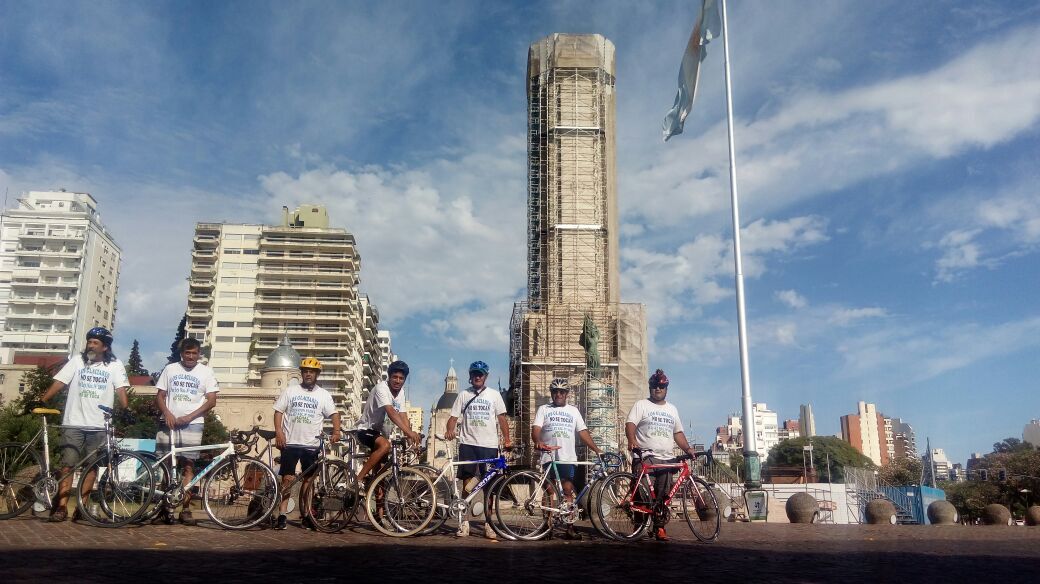
Among these efforts, in 2018, members of the Asamblea Jachal No Se Toca impressively travelled by bicycle for more than a week from the municipality of Jáchal, in the province of San Juan, approximately 1600 kilometres to Buenos Aires to join national protests to denounce then-President Macri’s attempts to modify the Glacier Law.
As part of its decade-long struggle to defend water, glaciers, and fragile ecosystems such as the San Guillermo Biosphere Reserve from large-scale mining activities, the Assembly Jáchal No Se Toca has systematically documented and denounced toxic spills at the Veladero mine and the response (or lack thereof) from local governments and Barrick, as well as the fact that Veladero mine is located in a periglacial zone, in violation of the Glacier Law. The Asamblea is also concerned about other mining projects located in San Juan province in glaciers and peri-glacial areas: the José María copper-gold-silver project owned by Canadian mining company Lundin Mining, the Vicuña copper-gold-silver project owned by BHP and Lundin Mining, and the Los Azules copper project owned by the Canadian company McEwen Mining Inc.
The bill was passed in Argentina’s Senate last Thursday, February 26. Lawmakers are scheduled to vote on it in the Chamber of Deputies, the lower house of the National Congress at the end of March.
Standing up to the Canadian Mining Lobby
With Javier Milei, a climate change denier, in power, environmental advocates and communities fear that this time the mining industry will be successful in its efforts to reform the Glacier Law, opening fragile glaciers and peri-glacial ecosystems to large-scale, destructive copper and gold mining.
Canadian mining companies’ role in pushing for these reforms must be denounced. In the context of the climate crisis and worsening water scarcity, national legislation that protects precious fresh drinking water should not be weakened under the pretense of advancing mining projects for the so-called energy transition, like McEwen Copper’s Los Azules project. Canadian companies like Barrick Mining Corporation, with its documented history of toxic spills and projects that already encroach on sensitive periglacial environments, should focus on respecting Argentinian law rather than changing it. The Canadian government consistently states that it expects Canadian companies to respect the law wherever they operate; that doesn’t include trying to change the law for their own benefit.
Argentinian lawmakers must stand up to the Canadian mining industry’s lobbying efforts and listen to the demands of the people to safeguard the glaciers and periglaciers, which are fundamental for sustaining life and livelihoods for millions of Argentinians.