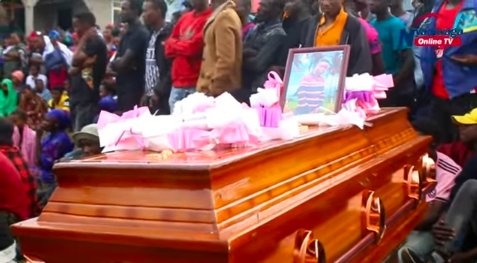
In Memory of Sue Moodie
We are mourning the loss of Sue Moodie of Whitehorse, Yukon. She was a kind, principled, and determined community activist, who loved music, being with friends, and living in the bush.
This week, Eleanor Goldfield digs into mining – past and present. First, author and organizer Mitch Troutman discusses his latest book, The Bootleg Coal Rebellion: The Pennsylvania Miners who Seized an Industry. Mitch shares the importance of remembering and sharing a radical past, as he puts it: nothing was ever inevitable and that history is taught best when it gives us agency in the present.
(Montreal) As the fourth week of the provincial election campaign begins, a coalition of local and national organizations announce that the movement against the current mining boom in southern Quebec has expanded to include a dozen Regional County Municipalities (RCMs) representing 142 municipalities in 5 administrative regions of Quebec (see list below). All of them are calling on the government of Quebec to review its Mining Act and its approach to “territories incompatible with mining activity.”
Canada has all the right components to cash in on an electric vehicle battery industry worth C$48 billion per year, but only if governments take ambitious action now to help the sector meet its potential, concludes a new report issued this week. But some parts of that vision are raising flags about the risks and impacts of a rush into battery supply chains. “A strong and coherent push to electrification, including EVs, is absolutely necessary and requires massive public investment, but it cannot be allowed to happen without integrating energy justice, economic justice, and environmental justice,” said Mining Watch Canada Co-Manager Jamie Kneen.
A Canadian-owned mining company and two executives at its zinc mine in Burkina Faso have been convicted of involuntary homicide in connection with a flooding disaster that killed eight mine workers. “It is extremely unusual for mining companies and executives to be charged, much less found guilty,” said Jamie Kneen, a researcher at Ottawa-based organization MiningWatch Canada. Geoffrey York and Niall McGee report for the Globe and Mail.
On the morning of Sunday, September 11, a tailings dam collapsed at the closed Jagersfontein diamond mine in Free State, South Africa. Local news reports the flood of mine waste killed at least three people and injured 40.
Neskantaga First Nation has long been among the most vocal critics of plans to build a proposed road that would connect the Ring of Fire mineral deposit to the highway networks and manufacturing might of Ontario’s south. Now, they’re working to start a sturgeon stewardship program in an effort to protect the fish from proposed development. Ontario Premier Doug Ford has made his intentions clear about opening up the Ring of Fire for development, and big players in the mining and electric vehicle (EV) industries are circling. But that idea is just a new public relations campaign for an old industry, says Jamie Kneen, the Canada program co-lead for MiningWatch Canada, a non-governmental organization based in Ottawa that acts as an industry watchdog.
The following guest blog was written by Elizabeth Ferry, a Professor of Anthropology at Brandeis University in Waltham, Massachusetts, USA. She has been conducting research on mining in Latin America since 1996. With Stephen Ferry, she is the author of La Batea, a book of texts and photographs on small-scale gold mining in Colombia (Editorial Icono/Red Hook Editions, 2017, available here).
Vancouver-based The Metals Company wants to be the first to mine the sea floor for critical minerals. But Catherine Coumans, Asia-Pacific program co-ordination for MiningWatch Canada says, "We definitely need to stop climate change and the heating of the planet. But we have to think about doing it in such a way that doesn't get us from the frying pan into the fire." Lisa Johnson reports for CBC News.
Chileans go to the polls this Sunday to vote on whether to adopt a new constitution that centres the protection of water and the environment as key pillars in the fight against the climate crisis. The Latin American Observatory for Environmental Conflicts (OLCA) has been at the forefront of the constituent process by organizing workshops and discussing key points in its “Eco-Constituyendo” podcast. OLCA provided MiningWatch with the following six highlights from the draft constitution as they relate to the protection of water and communities in the face of mining.